SisuSchedula streamlines timetable planning for higher education institutions
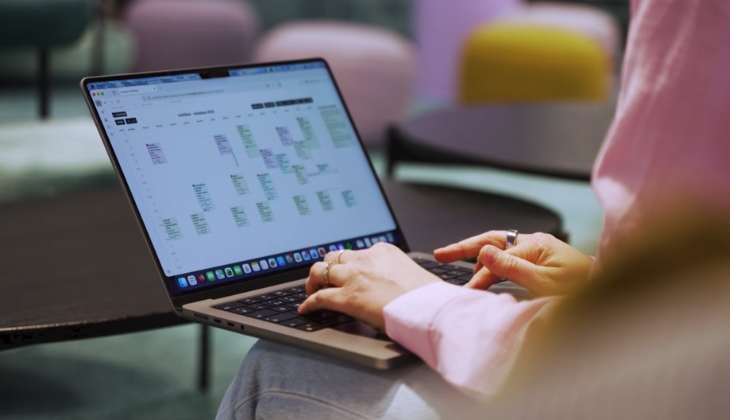
How does SisuSchedula support timetable planning and reduce duplication of effort? Find out how data from Sisu is integrated into the planning process.
Timetable planning at higher education institutions involves reconciling a large amount of data on course structures and teaching hours with lecturers’ preferences, facilities, specialised equipment and student groups. Funidata’s SisuSchedula is a timetable planning tool designed for higher education institutions that brings the planning process together based on data from Sisu.
SisuSchedula helps higher education institutions manage lecturers’ timetable preferences, schedule teaching and plan the use of facilities based on data from Sisu. Funidata’s Product Owner, Hanna-Leena Maunula, works in the team developing SisuSchedula. Maunula’s work focuses on project management, customer collaboration and coordinating development work.
“The first roll-out is currently underway this autumn, as LAB University of Applied Sciences adopts SisuSchedula. Sisu was rolled out at LAB in the summer, followed by SisuSchedula,” explains Maunula.
Incorporating teachers’ needs into timetable planning
As SisuSchedula has been developed, Funidata has interviewed various higher education institutions and organised user testing sessions. These have clearly highlighted the vital role teachers play in timetable planning.
Teachers know how much teaching time is required for a course, how long each teaching session should be and what special arrangements are needed. For example, in the social and health care sector, teaching may first require a theory session, followed by practical training in a specific facility and then another theory session. Physiotherapy teaching, for instance, may require access to a gym.
In SisuSchedule, lecturers can submit their timetable preferences directly into the system. Based on these, draft events and draft bookings are generated, which the timetable planner can then process and place in the calendar.
A single system reduces duplication of work
In many higher education institutions, teachers’ preferences are still collected using tools such as Excel spreadsheets. Planners then have to transfer the data separately into the timetable planning system. Sometimes, a separate system is used for lecturers’ preferences and another system specifically for the actual timetable planning. According to Maunula, SisuSchedula aims to reduce this kind of multi-step process.
SisuSchedula is used by timetable planners and teachers. At this stage, students do not have a specific role within SisuSchedula. The timetables planned in the system are visible to students in Sisu, where they select their course options and enrol for teaching.
Data from Sisu forms the basis for timetable planning
SisuSchedula is a standalone tool, but it is based on data from Sisu. According to Maunula, this is one of SisuSchedula’s strengths.
Study administration data is complex. Sisu handles courses, completion methods, assessment criteria and course implementations. For example, a student may complete a course by attending teaching or by taking a remote exam. Timetable planning needs to take this structure into account.
“When the system uses Sisu’s data and understands its structure, the higher education institution does not need to build complex integrations between different systems,” says Maunula.
SisuSchedula is being developed in collaboration with users
The design of SisuSchedula’s user interface is already well advanced. According to Maunula, the aim has been to create a fresh, modern, intuitive and clear user interface.
User testing has been carried out on prototypes with end-users. The feedback received has been fed back into the development work, and the user interface has been modified accordingly. Maunula emphasises that the initial roll-out is sure to yield further insights.
“SisuSchedula is not viewed as a closed system, but will be continuously developed in the future based on user experience,” says Maunula.
Optimisation will support timetable planners’ work in the future
Timetable planning is an ongoing process in higher education institutions. According to Maunula, it is not tied to a specific point in time, but is a permanent part of teaching planning.
In future, the plan is to introduce support functions into SisuSchedula that can assist with timetable optimisation. Maunula speaks of artificial intelligence and optimisation primarily as a means of supporting the planning process.
The aim is not for the system to replace human planning work. Building timetables still requires knowledge of the higher education institution’s practices, expert judgement and an understanding of teaching structures.
“We are not yet in a world where you just press a button and the timetables simply appear. We still need people, professional expertise and understanding,” says Maunula.
The aim is to develop the optimisation functionality so that higher education institutions can define their own rules within SisuSchedula. Based on these, the system could recommend when and where teaching should be organised to create a timetable that works as effectively as possible.
Practical needs guide the development of SisuSchedula
According to Maunula, a key aspect of SisuSchedula’s development has been that the product has been created in collaboration with users. Preparations for the first roll-out have proceeded smoothly through good collaboration, and the product has also attracted interest from other higher education institutions. Real users have been involved in user interviews and testing, so there has been no need to build the product based on assumptions.
“When we understand Sisu’s data, the structures of study administration at higher education institutions and the practical needs of timetable planning, we can build a tool that truly supports the work of planners and lecturers,” says Maunula.