Sisu integrations keep higher education institution data flowing
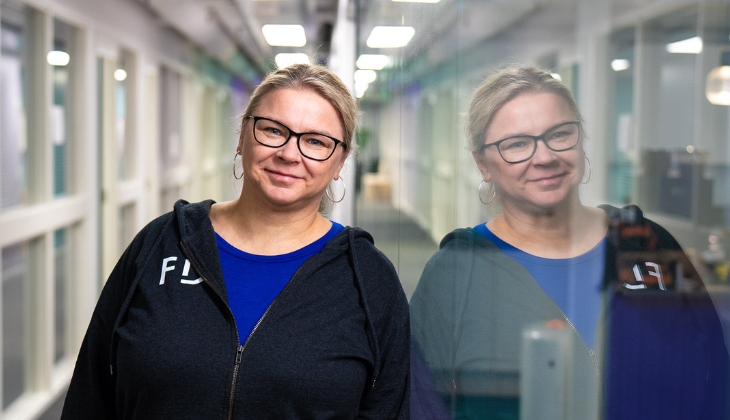
How do Sisu integrations keep higher education institution data flowing? Read how data moves smoothly and reliably between different systems and services.
Good integration ensures that students’ registration details, study attainments and graduation details are transferred in the correct format to the right places. According to Katja Arstio, the idea behind Sisu’s integrations is that higher education institution data should be understandable, standardised and available where it is needed.
Sisu, developed by Funidata, is a study administration system for higher education institutions, but it operates as part of a wider ecosystem. The institution’s own services, learning environments, national data repositories and government services all require the same data.
Katja Arstio, Product Owner in Funidata’s in-house team of experts, has been involved in the development of Sisu from its earliest stages. When the development of Sisu began in 2013, the starting point was the opportunity to design a modern student administration information system from the ground up. The aim was to re-examine higher education institutions’ study administration processes and how data is generated within them.
“When we set out to develop Sisu, we rethought everything from scratch. We considered how data is generated and which processes within the higher education institution generate that data,” explains Arstio.
Student activity generates data
In earlier approaches to system design, the register was often seen as a repository maintained by administrative staff. A key aspect of Sisu’s development was recognising the student as an active participant.
When a student plans their studies, registers for teaching, applies for credit transfers, completes studies or graduates, they are part of the process in which data is generated. This influences how the system should function and how its data model should be structured.
The significance of the data model is evident, for example, in how the lifecycle of a study right is represented in Sisu.
“We thought carefully about how a study right comes into being, what its starting point is, how it develops along the way and where the data ultimately goes,” says Arstio.
Once the data has been described in a standardised format, it can also be used outside the system. Data is transferred from Sisu to services including Virta, Studyinfo, Kela, Statistics Finland and the Ministry of Education and Culture.
The accuracy of the data has tangible implications for students’ lives. For example, receiving student financial aid requires accurate data, and details of study attainments, study rights and graduation must also be transferred correctly between systems.
“This data must be accurate. There can be no inaccuracies, as these matters relate to students’ lives,” says Arstio.
Data must flow without requiring extra work from the user
The practical significance of integrations is evident in the fact that users do not need to think about the transfer of data between systems.
The system environment in higher education institutions is often extensive. Teachers, students and administrative staff may use many different services in their work. If the connection between systems is left to the user, the overall workload increases and the likelihood of errors rises.
For example, when a learning platform is made available to a teacher for a course, integration reduces manual work and makes it easier to manage the overall system environment.
“If a teacher is about to teach a course and is using, for example, Moodle, ideally everything should already be in place where it is needed. Information should be transferred as simply and effortlessly as possible,” says Arstio.
Good integration does not eliminate the complexity of a higher education institution’s operations, but it prevents that complexity from becoming a burden on the user.
Integrations are at the heart of the service
From Funidata’s perspective, integrations are at the heart of the SaaS service. When Funidata builds and maintains interfaces, customers can utilise Sisu’s data in their own services and within national networks.
Clearly documented, secure interfaces and ongoing support make integrations easier to manage. At Funidata, integration-related issues are discussed with customers on a weekly basis. In addition, customers have direct channels for raising observations, questions and requests for changes.
“We make sure that the customer is not left on their own,” says Arstio.
This is also important because higher education institutions vary. They do not all have the same resources, system histories or technical capabilities. The service must also support customers that do not have a large in-house integration organisation.
Data needs meaning
According to Arstio, Sisu’s original design philosophy still holds true. High-quality data is generated where people are working and the system understands the meaning of their actions. This same foundation supports integrations as well as analytics, reporting and new tools.
That is why a successful integration does not simply mean that data is technically transferred from one system to another. The data must retain its meaning and be usable where it is needed.
At its best, the user need not pay any attention at all to the flow of data.
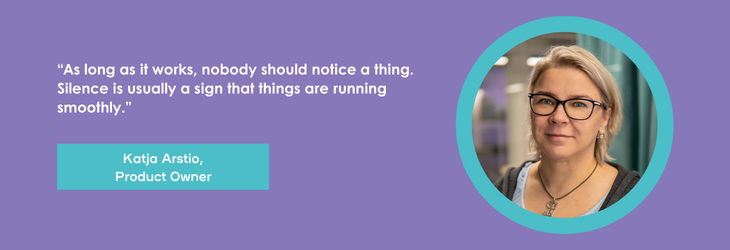
“As long as it works, nobody should notice a thing. Silence is usually a sign that things are running smoothly,” sums up Arstio.
Sisu evolves in line with the needs of higher education institutions
According to Arstio, Sisu is at its best at every moment. The system is continuously developed in response to what higher education institutions need and the direction in which their operations are evolving.
Arstio has spent almost her entire career working with student administration information systems. She explains that she ended up at the intersection of technology and study administration partly by chance but has stayed in the field because it gives her the opportunity to improve the way higher education institutions operate.
“I suppose I was meant to be a do-gooder. In a way, I suppose I did become one,” says Arstio.
In integrations, this can be seen concretely in the everyday lives of students, teachers, higher education institutions and public authorities: the right information is available where it is needed.
An information system alone does not make a higher education institution function effectively. However, it can help hold the whole system together. The basic idea behind Sisu’s integrations is that information flows because its meaning is understood before it is transferred.