Sisu for higher education groups is coming – are you ready?
Can one shared system unify everyday operations across a higher education group? Read how Sisu supports collaboration and information management.
Throughout spring 2026, discussions around the formation of higher education groups have become increasingly active. New forms of collaboration are being explored and deepened in both teaching and degree provision. The impact of these groups extends beyond organisational structures and becomes visible, among other things, in services and systems.
Sisu is built for collaboration
The starting point for developing Sisu has been to create a service that works seamlessly across Finnish higher education institutions. From the outset, it has been deliberately designed so that educational provision (curricula, courses, and teaching implementations) can operate across institutional boundaries and be directly accessible to all higher education institutions.
Higher education institutions using Sisu share a common system, its underlying logic, and technical platform. This means that the capability to combine two institutions into a group is genuinely a question of strategic intent rather than a technical challenge.
A core principle of Sisu is effective data management and the avoidance of duplicate content. The same version of data, such as a course, is always used, ensuring that separate copies of educational provision are not maintained across institutions and that information remains consistently up to date. In group structures, consolidating data content into a single Sisu environment helps align information with current standards and removes duplicate content that has accumulated over time.
For these reasons, a shared information system across the entire group provides an excellent foundation for modern information management and supports goals related to unified AI capabilities, data-driven management, and visibility into institutional operations. A genuinely shared system streamlines operations through automation and reduces costs through common processes and operating models.
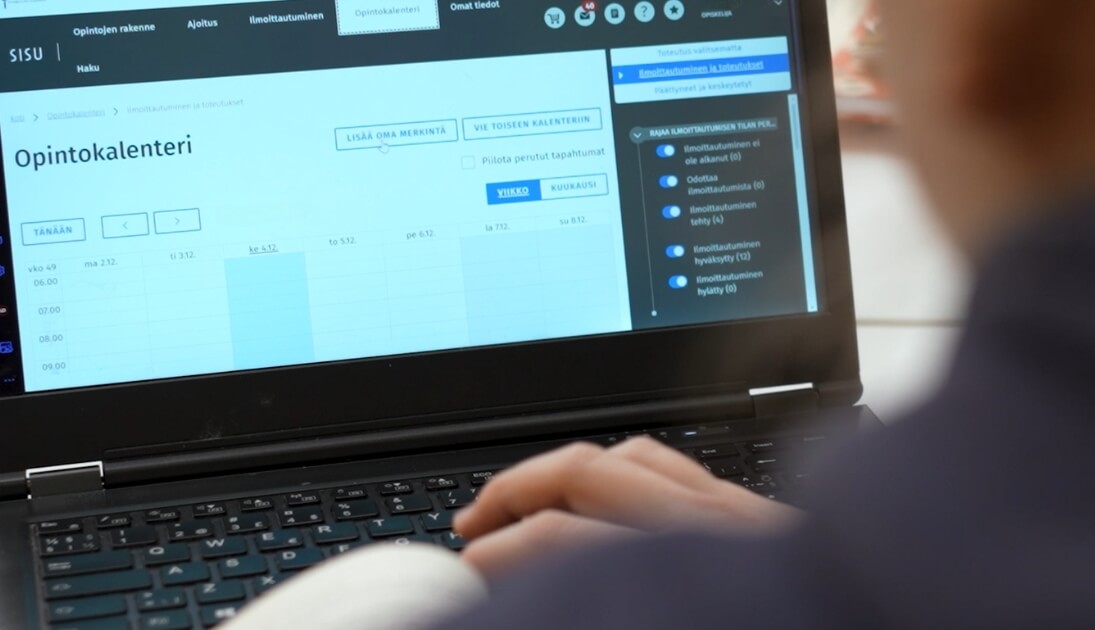
For students and staff, Sisu provides a unified user experience. Within the group, there are no separate tools, differing login methods, or varying practices depending on the system in use. Scheduling becomes easier because all events are managed within a single system, regardless of the institution. In addition, cross-institutional studies function seamlessly across higher education institutions, making enrolment for teaching just as straightforward as at one’s home institution. Information is transferred efficiently between systems, and completed credits are seamlessly integrated into national systems.
Making group operations part of everyday life
At Funidata, we see it as our mission to enable the shift towards stronger group operations, with Sisu playing a central role in this development. The needs of higher education groups are already strongly reflected in our development roadmap this year and will continue to shape our work in the years ahead. In practice, this means that a higher education group could operate with just one login, one user interface, and one comprehensive Student Information System service. The foundation for this already exists and is in active use today, so one shared Sisu for all institutions within a group may become reality sooner than you think.